
ADHD Symptoms: The True Face of ADHD (And Why It’s Definitely Not Laziness)
Official ADHD diagnostic criteria often focus only on what bothers the people around you, but that’s just the tip of the iceberg.
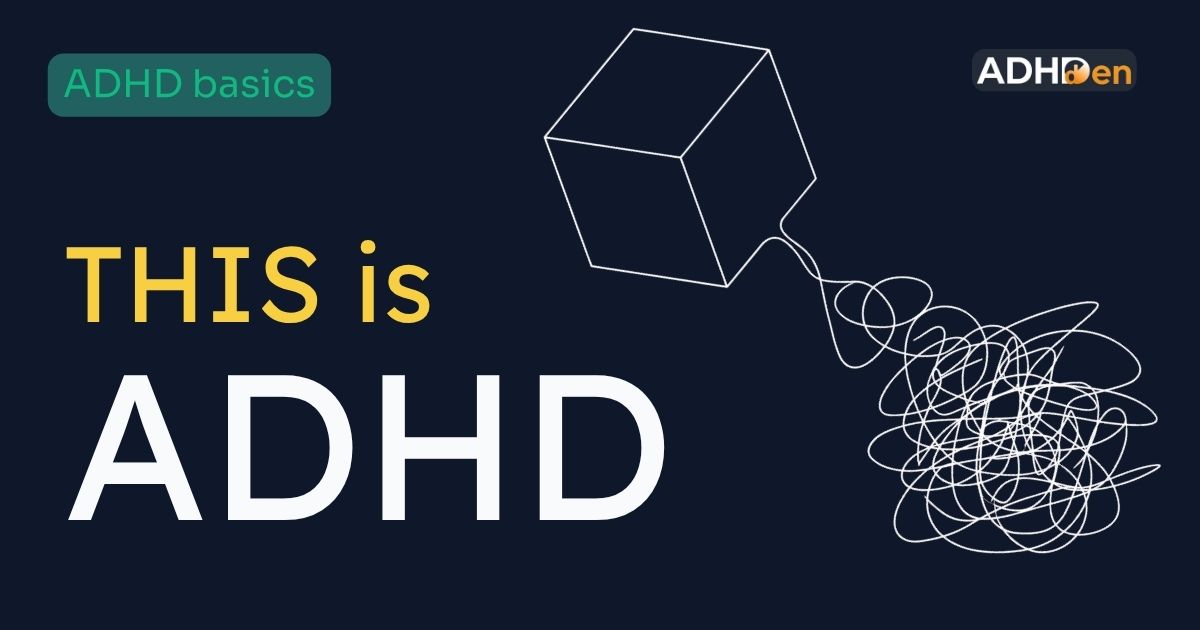
It’s 5 PM again. You’re sitting in front of an open Excel spreadsheet that you were supposed to finish this morning. Instead, you’ve read five articles about the history of espresso machines, meticulously organized a drawer you didn’t even know you had, brainstormed a whole new project, decided you absolutely need a new planner—and honestly, you might not even know what you’ve actually been doing all this time.
And then that familiar old feeling creeps in:
“Why can’t I just force myself to do what I need to do? Am I really just incredibly lazy?”
Hold on. Take a deep breath.
It’s not laziness. It’s neurology.
Imagine your brain not as a broken computer, but as a sleek, high-performing Mac in a world that runs entirely on Windows 97. (No offense to anyone or anything intended with this comparison!)
Your operating system is simply wired differently than the one most of society uses.
Official diagnostic criteria (and general public awareness) often focus only on what bothers the people around you: interrupting, lack of focus, losing things, fidgeting.
But that’s just the tip of the iceberg.
- •Dopamine Famine:
By nature, your brain has a completely different relationship with dopamine—the fuel that tells your brain, “This is important, let’s do it.” That’s why you can easily lose yourself for five hours in a brand new hobby (hyperfocus), but sending one boring email physically hurts. Without dopamine, your brain simply cannot start the engine. - •A Brain Without a Manager (Executive Dysfunction):
The part of your brain responsible for planning, organizing, and estimating time simply doesn't work on autopilot like it does for neurotypical folks. That’s why time often feels more like an abstract concept to you, leading to what we call "time blindness" (temporal scotoma). - •Internal Hyperactivity (Especially in Women and High-IQ Individuals):
Adults (and particularly women and twice-exceptional/2e individuals) aren't usually bouncing off the walls anymore (and let's be honest, maybe they never were). The hyperactivity just moved inside. It manifests as a constant, racing stream of thoughts, chronic exhaustion, sensory overload, and emotional reactivity—where you feel things much more intensely than everyone else.
Forget universal, one-size-fits-all advice like, “Just buy a planner and try harder.” We all know how that ends, even with the tenth new planner in a row. (Though personally, I do love my planners!)
Let’s try a different approach:
- •1. The Dopamine Appetizer:
Before tackling a boring task, give yourself a quick hit of joy. Blast your favorite song, do ten squats, or make yourself a really good cup of coffee. Give your brain a little spark before demanding high performance from it. - •2. Materialize Time:
Your brain isn’t naturally good at estimating or measuring time. Use visual timers (like the one in the ADHDen app) so you can actually see time literally slipping away, or put on a movie soundtrack that you know lasts exactly 45 minutes to pace your work. - •3. The "Body Double" Phenomenon:
Do the tough, unpleasant stuff alongside someone else. Whether you call a friend and mute your microphones, work from a bustling coffee shop, or just sit at the same table as your partner with your respective laptops... the mere presence of another human being gives your nervous system the calm and stimulation it needs to focus. - •4. Ditch the Guilt:
Ban the phrase “I should” from your vocabulary. Stop punishing yourself for not being neurotypical and for failing at standard advice. Instead, start looking for kind, accommodating systems that actually work for you.
ADHD is not a character flaw, and it definitely doesn't mean you are broken. Your creativity, your ability to see unexpected connections, and your incredible drive when you are truly passionate about something are massive gifts. You just need to learn how to drive this Ferrari with the brakes of an old moped.
Need a kind manual for your own brain? 👇
Download our free PDF checklist, "Dopamine Peace: My ADHD Operating System," where you'll find more practical hacks for managing your daily life without burnout and feelings of guilt.
Want to try these techniques in practice?
Launch the ADHDen app for free right in your browser.
Want to try these techniques in practice?
Launch the ADHDen app for free directly in your browser.
Launch ADHDen App